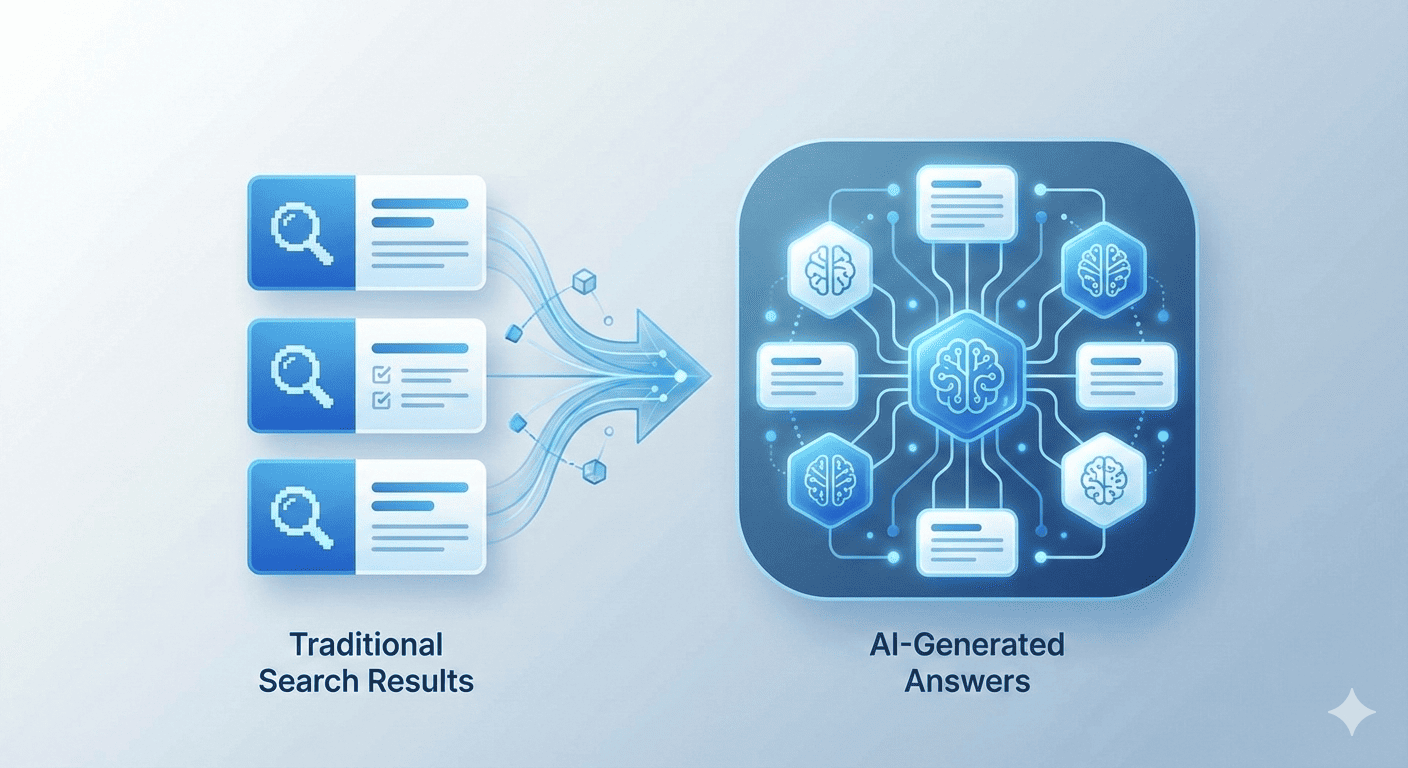
Generative Engine Optimization Strategies: A Practical Framework for AI-Driven Search Visibility
Author: Hassan Shroff – Founder, Marketing Scrappers
Credentials: SEO Strategist & Digital Marketing Consultant
Experience: 4+ years across SEO, content strategy, and growth marketing
Reviewed by: Senior SEO & Marketing Consultant
Introduction: Why Search Visibility Is Changing (And Why Many Businesses Feel Stuck)
Over the past two years, many businesses have noticed a familiar pattern:
organic traffic is becoming less predictable, rankings alone no longer guarantee clicks, and even high-quality pages struggle to surface when users rely on AI-powered answers instead of traditional search results.
This shift is not caused by poor SEO execution. In most cases, it’s the result of how search engines are evolving.
According to Google’s Search documentation and public announcements around Search Generative Experience (SGE), modern search systems increasingly generate answers, not just rank links. Content is now evaluated for its ability to be understood, summarized, and cited by AI systems, not only indexed.
This is where generative engine optimization (GEO) enters the picture.
This guide explains:
- What generative engine optimization is (in practical business terms)
- How generative engine optimization strategies differ from classic SEO
- Why GEO matters for AI-powered search visibility
- How marketers, content teams, and businesses can adapt sustainably
What this guide will not do:
- Promise quick rankings or guaranteed AI inclusion
- Promote tools or services without context
- Replace the need for sound SEO fundamentals
Instead, it provides a clear, neutral framework decision-makers can use to evaluate GEO as part of their long-term search strategy.
What Is GEO & How It Works
What Is Generative Engine Optimization?
Generative engine optimization is the practice of structuring and positioning content so that AI-driven search engines can accurately interpret, synthesize, and reference it when generating responses.
Unlike traditional SEO, which focuses primarily on rankings and clicks, GEO focuses on inclusion, citation, and semantic trust within AI-generated answers.
In practical terms, GEO asks a different question:
“If an AI system had to explain this topic to a user, would it confidently use this content as a source?”
How Generative Engine Optimization Works
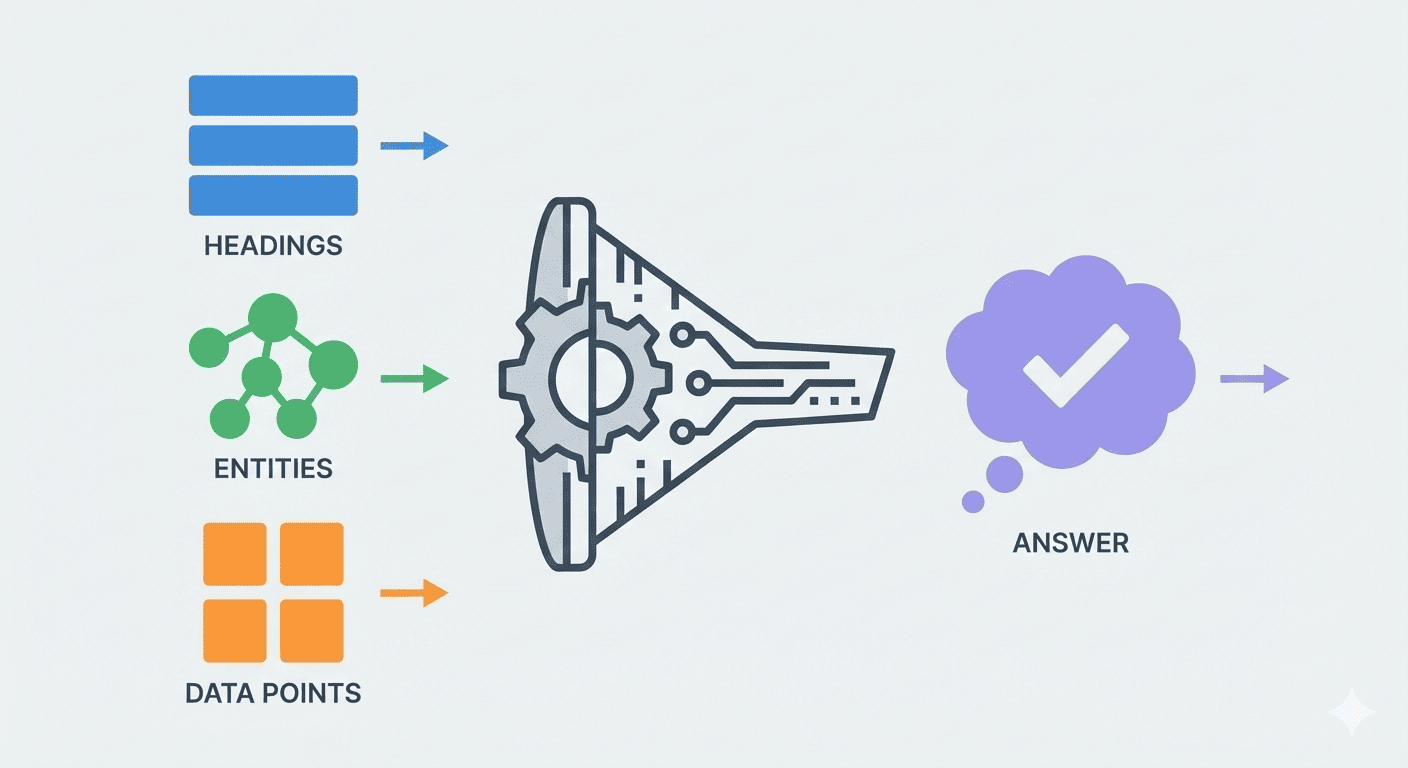
Based on Google’s Search documentation, AI Overviews, and large-language-model behavior patterns, generative engines typically:
- Ingest content semantically, not just by keywords
- Identify authoritative explanations, definitions, and frameworks
- Cross-validate information across multiple sources
- Synthesize answers rather than linking to one page
This means an optimization engine now evaluates:
- Concept clarity
- Logical structure
- Factual consistency
- Source credibility signals
GEO does not replace SEO; it builds on it by optimizing for machine understanding, not just discoverability.
(Supporting content suggestion: “What Is Generative AI & How It Processes Information”)
Why Generative Engine Optimization Matters for AI Search
AI-Powered Search Is Redefining Visibility
According to Google’s Search documentation and public SGE demos, AI-powered search experiences aim to:
- Reduce repetitive searches
- Provide synthesized answers faster
- Cite multiple authoritative sources
In practice, this means:
- Fewer blue-link clicks for generic queries
- More value assigned to explanatory, structured content
- Higher visibility for sources AI trusts, even without top rankings
Generative Engine Optimization Strategies for AI Visibility
Across multiple industries, common patterns observed in analytics include:
- Pages with clear definitions and frameworks appearing in AI summaries
- Brands gaining visibility without proportional traffic increases
- Thin or opinion-heavy content being ignored by AI answers
GEO matters because visibility is no longer only about traffic, but about being part of the answer ecosystem.
(Supporting content suggestion: “How GEO Impacts Google SGE & AI Search Results”)
Core Generative Engine Optimization Strategies (High-Level)
This section focuses on strategy, not tactics.
1. Optimize for Explanation, Not Persuasion
AI systems prioritize content that explains concepts neutrally. Over-promotional language, exaggerated claims, or aggressive CTAs reduce citation likelihood.
2. Build Semantic Depth Around Topics
Generative engines favor content that covers:
- Definitions
- Context
- Comparisons
- Use cases
rather than isolated keyword pages.
3. Structure Content for Machine Readability
Based on platform guidelines and observed AI behavior:
- Clear H2/H3 hierarchy matters
- Short, self-contained sections perform better
- Explicit topic boundaries improve synthesis
4. Align With Verified Knowledge Sources
According to industry-wide SEO consensus, AI systems cross-check information with:
- Platform documentation (Google, Meta, etc.)
- Widely accepted best practices
- Consistent terminology
(Supporting content suggestion: “Advanced Generative Engine Optimization Strategies”)
GEO vs Traditional SEO: How They Work Together
Generative Engine Optimization vs Traditional SEO
| Aspect | Traditional SEO | Generative SEO (GEO) |
|---|---|---|
| Primary Goal | Rankings & clicks | AI inclusion & citation |
| Optimization Focus | Keywords, links | Semantics, clarity |
| Success Signal | Traffic growth | Visibility + authority |
| Content Style | Page-centric | Topic-centric |
In practice, businesses struggle most when they treat GEO as a replacement for SEO. The reality is:
Strong GEO depends on strong SEO foundations, but extends beyond them.
(Supporting content suggestion: “Generative Engine Optimization vs Traditional SEO – A Deep Comparison”)
Content, Marketing & Use-Case Overview
Generative Engine Optimization for Content Marketing
In real client campaigns, GEO-aligned content tends to:
- Support long-form pillar strategies
- Increase brand mentions in AI summaries
- Improve topical authority signals
GEO for Digital Marketing Campaigns
GEO is particularly relevant for:
- Educational blog hubs
- B2B service pages
- Product comparison content
- Thought leadership articles
Rather than chasing trends, GEO integrates naturally into content marketing systems already built for SEO.
(Supporting content suggestion: “GEO for Content Creators & Marketing Teams”)
Tools, Platforms & AI Models (Overview Only)
Generative Engine Optimization Tools
At a high level, GEO workflows may involve:
- AI-assisted content research tools
- NLP analysis platforms
- Structured data testing tools
- Search Console & GA4 for validation
AI Models Used in Generative Engine Optimization
AI-powered search relies on large language models and retrieval systems designed to:
- Interpret context
- Rank semantic relevance
- Reduce hallucination risk
Tool choice depends heavily on team size, budget, and maturity.
(Supporting content suggestion: “Best Generative Engine Optimization Tools in 2026”)
Business & Industry Use Cases
Generative Engine Optimization Strategies for Small Businesses
Small teams benefit from GEO by:
- Focusing on fewer, higher-quality resources
- Competing on clarity rather than volume
- Building authority within narrow niches
- GEO for E-Commerce & Product Discovery
In product-driven environments, GEO helps:
- Clarify product categories
- Support comparison queries
- Improve AI-driven discovery paths
(Supporting content suggestion: “GEO for E-Commerce & Product-Led Businesses”)
Services, Experts & Implementation Paths
Generative Engine Optimization Services
Some organizations choose to implement GEO internally, while others work with consultants or agencies for:
- Content restructuring
- Semantic audits
- AI-visibility assessments
The right path depends on internal resources, risk tolerance, and growth timelines.
(Supporting content suggestion: “How to Choose a Generative Engine Optimization Service Provider”)
Implementation Roadmap & Checklist (Preview)
A practical step-by-step guide to generative engine optimization typically includes:
- Content inventory & intent mapping
- Semantic gap analysis
- Pillar-cluster restructuring
- Authority alignment with platform guidelines
- Performance validation via analytics
This pillar intentionally stops short of execution details.
(Supporting content suggestion: “Generative Engine Optimization Checklist for 2026”)
Final Perspective: GEO as a Long-Term Search Discipline
Generative engine optimization strategies are not shortcuts or trend hacks. They reflect how search engines are evolving toward understanding, synthesis, and trust.
Businesses that treat GEO as:
- A content quality framework
- A semantic clarity discipline
- A complement to SEO
are better positioned for sustainable visibility in AI-driven search environments.
Clarity consistently outperforms cleverness.
Structure outlasts tactics.
And authority compounds over time.
Optional Closing (Non-Educational)
Some organizations choose to work with agencies like Marketing Scrappers to align SEO, content strategy, and generative search visibility under a single framework. For teams navigating this transition at scale, external strategic support can help reduce experimentation risk while maintaining long-term search integrity.
About the Author
Hassan Shroff is the Founder of Marketing Scrappers and an SEO Strategist with 4+ years of experience across search optimization, content marketing, and digital growth systems. His work focuses on building sustainable, AI-aligned visibility strategies for businesses across competitive markets.