
Why AI Competitor Analysis Matters More Than Ever in 2026

AI search environments in 2026 are evolving rapidly, reshaping how marketers create content and optimize websites. This shift is similar to the changes discussed in Is Google Search Dying & AI Is Eroding Search Traffic — traditional SEO signals are becoming less dominant as AI-generated results take over.
Traditional competitor research is too slow for today’s AI-driven SERPs. Brands need smarter frameworks much like those used in GEO Site Architecture: How to Structure Your Site for AI Answers to stay ahead.
With AI competitor analysis, marketers can uncover:
- Hidden ranking opportunities
- Real-time SERP volatility
- Keyword gaps competitors don’t see
- Content formats favored by AI search engines
- Weaknesses in competitor site structure
This proactive model mirrors the strategies used in How to Get Cited by AI: Practical Playbook & Templates, where anticipating AI behavior is the key advantage.
Best AI Tools for Competitor Research & Market Intelligence
AI SEO Tools for Deep Competitor Breakdown
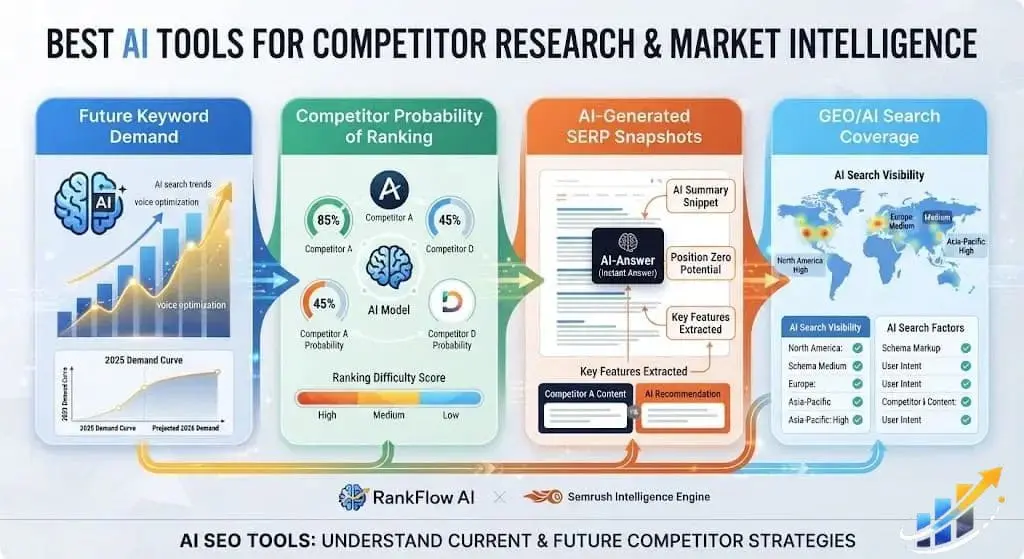
Competitor analysis tools have evolved dramatically — far beyond the basics of 2024–25. This aligns with the advancements explained in Is SEO Still Worth Learning in 2025? — A Realistic Beginner’s Roadmap where AI SEO tools became essential rather than optional.
Modern AI SEO tools now evaluate:
- Future keyword demand
- Competitor probability of ranking
- AI-generated SERP snapshots
- GEO/AI Search coverage
Platforms like RankFlow AI and Semrush Intelligence Engine help you understand both current and future competitor strategies — similar to how your Schema Markup Checklist for AI Search (12 Types) prepares pages for AI-driven ranking environments.
AI Content Gap Analysis for Smarter Content Planning
AI can analyze millions of pages instantly and show:
- What competitors cover
- What you cover
- What no one covers (the real goldmine)
This approach works perfectly with your Free Keyword Research Tools That Actually Work (2025 Beginner’s Workflow) article, helping users move from basic keyword ideas to deep topical intelligence.
This produces zero-waste content strategies that align with your existing frameworks like:
- 25-Point GEO Audit Checklist For Website Architecture
- GEO Audit Checklist for E-commerce (50 AI-Friendly Tests)
These content audits combined with AI analysis make your SEO strategy more predictable and scalable.
AI-Powered Market Intelligence for SEO Teams
AI systems monitor competitor behavior continuously by tracking:
- Publish frequency
- Content type shifts
- SERP presence in AI overviews
- Schema or technical updates
This level of intelligence works perfectly alongside the principles shared in AI Marketing ROI: Cannes Leaders Invest Big, But Why?, where AI-driven insights help organizations make data-backed decisions.
Similarly, integrating AI behavior tracking enhances your team’s strategic capabilities in the same spirit as your Looker Studio Template & 1-Page SLA (Starter Layout) because both enable consistent, measurable marketing performance.
How AI Competitor Analysis Improves Rankings Faster
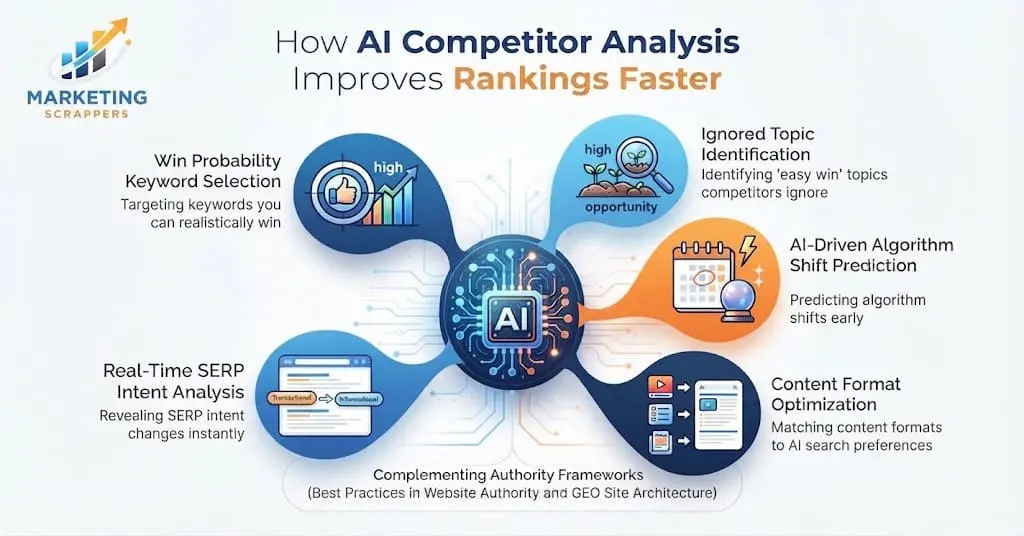
AI-driven competitor analysis improves rankings by:
- Targeting keywords you can realistically win
- Identifying “easy win” topics competitors ignore
- Predicting algorithm shifts early
- Matching content formats to AI search preferences
- Revealing SERP intent changes instantly
These methods complement frameworks you’ve already published, such as:
- Best Ways To Build Website Authority in 2025
- GEO Site Architecture: How to Structure Your Site for AI Answers
Both help strengthen authority and visibility — and AI competitor analysis amplifies them even more.
This workflow reduces content waste and ensures the same precision outlined in What to Write for Each Stage of Awareness — Landing Page Templates, where every element is planned based on user intent.
How to Integrate AI Competitor Analysis Into Your Workflow in 2026
To succeed in 2026, agencies and SEO teams should integrate AI competitor analysis through:
- Predictive keyword opportunity scans
- Monitoring competitor content velocity
- Identifying GEO/AI search gaps
- Refreshing old content
- Tracking schema adoption
- Reviewing entity coverage
- Using automated SERP change alerts
This gives you a workflow as structured and efficient as the systems in GEO Audit Sheet 50 Points & Checklist and its companion GEO Audit Checklist for E-commerce.
For content teams, integrating AI analysis mirrors your guidance in How Digital Marketing Agencies Are Evolving in 2025: SEO, AI, and Brand Authenticity — adapting processes, improving systems, and aligning teams with modern AI-first marketing.