
Offcanvas

When Should We Call You?

Edit Template

Author name: shahidhashmi714@gmail.com

best seo outsourcing company
seo blog

Choose the Best SEO Outsourcing Company for Your Business

7 Things to Know about the Best SEO Outsourcing Company: Introduction: In today’s digital world, businesses always look for ways to stand out online. One smart strategy is outsourcing SEO services. When choosing an SEO outsourcing company, find one that knows your industry well. They should offer services like on-page SEO, off-page strategies, and content creation. Makes sure they keep up with the latest trends and use advanced tools to track results. Look for companies that offer white-label services if you want to brand the SEO work as your own. This guide will walk you through the best SEO outsourcing companies, using keywords naturally to ensure a smooth and informative read. Best SEO Outsourcing Companies: White Label Local SEO White-label local SEO services are great for agencies that want to offer SEO without the hassle of managing it themselves. Companies like Blue Rocket SEO specialize in this, providing excellent local SEO solutions under your brand name. Outsource SEO Company Companies like SEO Services RankStar offer a full range of services, including on-page and off-page SEO. They are known for their effective strategies and measurable results. Specialized SEO Services SEO for Doctors SEO for doctors is a specialized area that requires specific knowledge. Companies focusing on this sector understand the unique needs of medical professionals, helping them attract the right audience online. Home Services SEO Home Services SEO is another specialized field. Companies in this niche help businesses like plumbers, electricians, and contractors rank higher in local searches, bringing in more relevant traffic. Expert Insights and Tools SEO Quiz An SEO quiz can help you assess your current SEO knowledge and identify areas for improvement. Many SEO outsourcing companies offer these quizzes as a free service. Michael SEO Martial Arts Michael SEO Martial Arts combines unique marketing strategies with SEO, making it a standout in the industry. Their approach mixes traditional SEO techniques with innovative methods to get great results. Google SEO Tools Jackyan Using Google SEO tools Jackyan can greatly improve your SEO strategy. These tools provide valuable insights into your website’s performance and keyword rankings. Off-Page SEO Services Off-page SEO services are crucial for building your site’s authority and trustworthiness. These include link building, social media marketing, and influencer outreach. Promovare SEO Promovare SEO is known for its effective link-building strategies that drive organic traffic and improve search engine rankings. SEO Content Services Creating high-quality content is essential for successful SEO. SEO content services ensure your website has valuable, keyword-rich content that resonates with your audience. SEO Rich Text SEO-rich text involves creating content that is both keyword-optimized and engaging. This helps improve user experience and search engine rankings. Technical SEO and Consulting: URL Starter and WordPress SEO Expert Optimizing your website’s URL structure is a key part of technical SEO. Companies like URL Starter specialize in this, ensuring your URLs are clean and optimized. Additionally, a WordPress SEO expert can help you get the most out of your WordPress site. SEO Consultants Kidderminster For personalized SEO strategies, SEO consultants in Kidderminster offer tailored solutions. They analyze your website and develop custom strategies to improve your online presence. Free Trial SEO Services Many SEO outsourcing companies offer free trial SEO services, allowing you to test their effectiveness before committing. This is a great way to see the quality and impact of their services. SEO Updates and Trends Google SEO Updates Jackyan Keeping up with the latest Google SEO updates Jackyan is essential for maintaining your website’s ranking. SEO outsourcing companies stay on top of these updates to ensure your site follows the latest guidelines. SEO In-Guk Relationships Understanding SEO In-Guk relationships means analyzing how different SEO factors interact to influence your website’s ranking. This approach is crucial for developing an effective SEO strategy. Case Studies and Success Stories SEO Rank Hunter SEO Rank Hunter has a bunch of success stories about helping businesses get top search rankings. Their case studies show how their strategies work and the results they get. They focus on both on-page and off-page SEO to make sure clients see real improvements in their search engine rankings. WordPress SEO Consultant A WordPress SEO consultant provides useful tips and strategies just for WordPress sites. Then make sure your site is fully optimized for search engines, from URL structure to keyword-rich content. They help businesses get the most out of their WordPress sites, bringing in more traffic and boosting visibility. Blue Rocket SEO Blue Rocket SEO stands out with some impressive case studies. They specialize in white-label local SEO, helping other agencies offer great SEO services under their name. Blue Rocket SEO has helped many businesses improve their local search rankings, driving more local traffic and increasing sales. Their practical, results-driven strategies make them a solid choice for businesses looking to boost their local SEO. Conclusion Choosing the best SEO outsourcing company can greatly impact your online success. Whether you need white-label local SEO, specialized services like SEO for doctors, or expert consulting, there’s an outsourcing solution for every business. By naturally integrating relevant keywords and focusing on each company’s unique offerings, this guide provides a comprehensive look at finding the perfect SEO partner. SEO Quiz What is an SEO Outsourcing Company? An SEO outsourcing company helps businesses improve their search engine rankings without needing an in-house SEO team. These companies handle everything from keyword research to link building, making sure your website gets noticed by search engines. Why Outsource SEO? Outsourcing SEO can save money by eliminating the need to hire and train an in-house team. Plus, you’ll get access to expert knowledge and advanced tools that might not be available internally.

drive digital marketing
Marketing

Drive Digital Marketing: Data Driven Strategies Theory and Applications

Drive Digital Marketing: Data Driven Strategies Theory and Applications Introduction In today’s technology-driven world, digital marketing plays an important role for businesses looking to thrive in competitive markets. At its core are data-driven strategies that are changing how brands engage with their audiences and achieve measurable success. Harnessing the power of data is not just a trend but a fundamental shift towards more accurate and efficient marketing practices. This article explores the critical role that data plays in formulating effective digital marketing campaigns and the impressive results it delivers. Data Driven Decision Making Understanding Your Audience: Data-driven digital marketing starts with understanding your audience’s preferences, behaviors and demographics. By using tools such as consumer research and market segmentation, marketers can gain deeper insights into their target segments. This insight enables personalized marketing efforts that resonate more with audiences, increasing engagement and conversion rates. Sets Smart Goals: Successful digital marketing initiatives depend on setting SMART goals—specific, measurable, attainable, relevant, and timely. These objectives provide a clear roadmap for marketing campaigns, ensuring alignment with broader business objectives. SMART goals facilitate the effective planning, execution, and evaluation of marketing strategies, enabling marketers to track progress and optimize efforts based on data-driven insights Data Driven Testing: Optimizing Campaigns Data-driven testing involves repeated testing to refine marketing strategies and improve campaign performance. Through A/B testing, marketers can compare versions of their campaigns in real time, and analyze which variations best resonate with their audience. This data-driven approach reduces guesswork and maximizes ROI by identifying and scaling successful strategies and reducing risks associated with ineffective strategies. Data Driven Insight: Content Marketing Data-driven insights shape strategies by revealing trending topics, preferred content, and best delivery methods. By analyzing content performance metrics such as engagement rates, bounce rates, and social shares, marketers can fine-tune their content strategy to better meet audience expectations and achieve desired results This repetitive approach this ensures content efforts are data-backed and audience-focused, providing visibility and drive to drive meaningful engagement. Data Driven Marketing: Social Media Marketing Data-driven strategies in social media marketing involve analyzing audience behavior and having preferences for crafted content and messaging. By using social media analytics tools, marketers can determine the most effective ways to reach their target audience and adjust content strategies accordingly . . . . This targeted approach maximizes brand visibility, fosters community engagement, and drives conversion through personal interactions with potential customers. Paid Advertising: Data-driven techniques in paid advertising allow for more accurate and efficient targeting of advertising campaigns. By analyzing demographic data, buying behavior, and communication metrics, marketers can segment their audiences and deliver tailored messages tailored to specific consumer segments This approach saves advertising spend is greater, improves conversion rates, and enhances overall campaign success. Data Driven Results: Conversion Rate Optimization (CRO): Conversion rate optimization (CRO) techniques use data insights to improve user experience and drive conversion. By analyzing user behavior, conducting usability tests, and optimizing website design and functionality, marketers can identify and remove barriers to conversion . . . . Continuous testing and adjustment based on data-driven insights ensures that marketing efforts are constantly optimized for maximum effectiveness and ROI. Measuring Drive Digital Marketing Success: Measuring the success of digital marketing campaigns goes beyond standard KPIs like acquisition rates and ROI. It includes monitoring engagement metrics such as CTR and bounce rates, assessing brand awareness through social mentions and non-branded traffic, and gauging customer satisfaction with CSAT and retention rates. Evaluating content performance via page views and shares, SEO effectiveness with organic traffic growth and rankings, and analyzing CPA and conversion paths provide a comprehensive view. These metrics collectively inform strategic decisions, optimize budgets, and enhance overall campaign effectiveness, driving sustained business growth and customer engagement. Factors to consider: Proper management of digital assets is essential to maintain brand integrity and maximize marketing effectiveness. Implementing a robust Digital Asset Management (DAM) system ensures that design, marketing, including image, video and brand assets, is consistent across all channels This approach has been developed this simplicity increases operational efficiency, reduces duplication of effort and strengthens brand identity in the marketplace . Choosing the Right Digital Marketing Agency: Partnering with a reputable digital marketing agency can have a huge impact on the success of your marketing initiatives. When choosing a company, consider their expertise in data-driven techniques, track record of delivering measurable results, and alignment with your business goals and values. Reporting transparency, strategic vision and strategic collaboration are important considerations when choosing a digital marketing partner. Conclusion In conclusion, data-driven digital marketing enables businesses to navigate complex strategies, seize opportunities, and achieve sustainable growth in dynamic markets By using data to create strategies news, marketers can improve campaign effectiveness, increase customer engagement, and drive meaningful business results. As digital marketing continues to evolve, it’s important to stay on top of emerging trends and technological advances to maintain a competitive edge in today’s digital environment. FAQs What is data-driven digital marketing? Data-driven digital marketing uses insights from data analytics to develop and execute targeted marketing strategies, increasing effectiveness and ROI. How does digital marketing drive sales? Digital marketing drives sales by aligning messaging, content and advertising with consumer behavior and preferences identified through data analytics. This targeted approach increases engagement and conversion rates, ultimately increasing sales results.

digital marketing #1 autocomplete pro LLC
seo blog

Digital Marketing #1 Autocomplete Pro LLC

Introduction Digital marketing is a dynamic field that requires constant adaptation to new trends and technologies. It encompasses strategies like SEO, content marketing, social media, and email campaigns to promote products and services online. One of the latest game-changers in digital marketing is autocomplete. This search engine feature predicts user queries as they type, offering suggestions that enhance user experience and improve SEO. By leveraging autocomplete, businesses can increase their online visibility and attract more targeted traffic. Discover how “Digital Marketing #1 Autocomplete Pro LLC” is revolutionizing the field of digital marketing with its focus on autocomplete optimization. In this blog, we explore how “Digital Marketing #1 Autocomplete Pro LLC” is transforming the digital landscape. We will discuss the importance of autocomplete, its benefits for digital marketing, and effective strategies for optimizing it. By understanding and utilizing autocomplete, you can enhance your online presence and stay ahead in the competitive world of digital marketing. Understanding Autocomplete Autocomplete, also known as search suggests, is a feature in search engines that predicts what users are typing and provides suggestions in real time. This functionality not only speeds up the search process but also helps users find relevant information more efficiently. For digital marketers, understanding and optimizing for autocomplete can significantly impact search visibility and user engagement. Importance of Autocomplete in Digital Marketing Autocomplete suggestions often appear at the top of search results, making them highly visible to users. By optimizing for these suggestions, businesses can ensure their content appears prominently. This visibility is crucial for attracting more traffic to your website. Improving user experience is another benefit of autocomplete. When users see relevant suggestions as they type, they are more likely to find what they are looking for quickly. This enhanced user experience can lead to higher engagement and satisfaction. Higher click-through rates (CTR) are another advantage. Content that appears in autocomplete suggestions tends to receive more clicks because users often choose from the suggested options. This can drive more traffic to your site. Analyzing autocomplete suggestions can provide valuable insights into user intent. By understanding what users are searching for, marketers can tailor their content to meet audience needs more effectively. Strategies to Rank #1 in Autocomplete Conduct thorough keyword research to identify the terms and phrases users are likely to type into search engines. Tools like Google Keyword Planner and SEMrush can be invaluable in this process. Optimize your content by incorporating these keywords naturally. Ensure that your content is high-quality, relevant, and provides value to the reader. Stay updated with the latest search trends and adjust your strategy accordingly. Tools like Google Trends can help you track the popularity of specific search terms over time. Focus on long-tail keywords, which are more specific and often less competitive. These can be easier to rank for and more likely to appear in autocomplete suggestions. How #1 Autocomplete Pro LLC Can Help #1 Autocomplete Pro LLC specializes in optimizing autocomplete suggestions for businesses. Their innovative approach and advanced tools can enhance your digital marketing strategy. They offer autocomplete optimization and tailoring suggestions to match user search behavior. This ensures that your content appears prominently in autocomplete suggestions. SEO integration is another service they provide, combining autocomplete with broader SEO strategies to improve overall search rankings. This comprehensive approach can significantly boost your online visibility. Data analysis is also a key part of their services. By providing insights and analytics, they help businesses track performance and make data-driven decisions. Future Trends in Autocomplete As search algorithms continue to evolve, autocomplete is expected to become even more sophisticated. One trend to watch is the integration of voice search. With the rise of voice-activated devices, optimizing for voice search autocomplete suggestions will become increasingly important. Advanced AI and machine learning algorithms will provide more personalized and accurate autocomplete suggestions based on user behavior. This will make search results even more relevant and useful. As mobile search continues to grow, ensuring your mobile-friendly autocomplete optimization will be crucial. Mobile users expect quick and relevant results, so focusing on mobile-friendly autocomplete can improve user experience. Conclusion Optimizing for autocomplete is a powerful strategy that can significantly enhance your digital marketing efforts. Businesses can achieve greater visibility and engagement by understanding user intent, staying ahead of search trends, and leveraging the expertise of companies like #1 Autocomplete Pro LLC. As the digital landscape continues to evolve, embracing these strategies will ensure you stay at the forefront of the industry. Call to Action Ready to take your digital marketing to the next level? Contact us today to learn how we can help you optimize for autocomplete and drive more targeted traffic to your website. Let’s revolutionize your digital presence together! FAQs What is autocomplete in digital marketing? Autocomplete is a feature in search engines that predicts what users are typing and offers real-time suggestions. How does autocomplete benefit my digital marketing strategy? It increases visibility, improves user experience, and drives more traffic to your website. What is the role of #1 Autocomplete Pro LLC in digital marketing? They specialize in optimizing autocomplete suggestions to enhance your SEO and online presence. How can I optimize my content for autocomplete? Conduct keyword research, use relevant keywords naturally, focus on long-tail keywords, and create high-quality content. Why is user intent important in autocomplete optimization? Understanding user intent helps you create content that meets user needs, improving your chances of appearing in autocomplete suggestions. How does autocomplete impact SEO? Optimizing for autocomplete suggestions can improve search rankings and increase organic traffic. What tools can help with autocomplete optimization? Tools like Google Keyword Planner, SEMrush, and Google Trends help identify popular search terms and trends. How does autocomplete improve user experience? It provides quick, relevant suggestions, helping users find information faster and more efficiently.

students using social media
Social Media

10 Ways to Use Social Media More Efficiently for Students

Table of Contents The blog titled “10 Ways to Use Social Media More Efficiently for Students” is a comprehensive guide that explores practical strategies for students to optimize their use of social platforms. It covers ten key approaches, from engaging in live lectures to promoting a positive online presence. This topic is crucial in today’s digital age as social media plays a significant role in student life, offering opportunities for learning, networking, and personal development. By understanding and implementing these strategies, students can leverage social media as a powerful tool to enhance their academic performance, connect with peers and mentors, and build a professional digital footprint. 1. Social Media for Student Education Social media platforms have evolved into powerful tools for enhancing student education. Students can access a wealth of educational content, collaborate with peers, and engage in discussions with experts in their field of study. Platforms like Facebook, YouTube, and Twitter offer live lectures, educational videos, and informative posts that supplement traditional classroom learning. By leveraging social media, students can expand their knowledge, participate in interactive learning experiences, and stay updated with the latest trends and developments in their areas of interest. 2. Empowering Students with Social Media Social media empowers students by providing them with a platform to voice their opinions, share ideas, and collaborate on projects. Through group messaging and online communities, students can connect with like-minded individuals, seek guidance from mentors, and contribute to meaningful discussions. Platforms such as WhatsApp, Facebook groups, and educational forums facilitate communication, foster creativity, and promote a sense of belonging among students. By harnessing the power of social media, students can develop valuable skills, build professional networks, and take ownership of their learning journey. 3. Enhancing Learning via Social Media Social media enhances learning by offering a diverse range of educational resources and interactive tools. Students can access online courses, tutorials, and webinars to supplement their classroom learning and gain practical insights into various subjects. Platforms like Instagram and TikTok can be utilized creatively to present educational content in engaging formats such as infographics, short videos, and interactive quizzes. By leveraging these innovative approaches, students can enhance their understanding, improve retention, and cultivate a lifelong love for learning. 4. Maximizing Social Media for Student Success Maximizing social media for student success involves strategic use of platforms to support academic goals, career aspirations, and personal development. Students can create professional profiles on LinkedIn, showcase their skills and achievements, and connect with industry professionals for mentorship and networking opportunities. Additionally, social media can be used to promote academic achievements, share research findings, and collaborate on projects with peers from around the world. By harnessing the full potential of social media, students can achieve academic excellence, gain valuable experience, and prepare for future success. 5. Navigating Social Media for Learning Navigating social media for learning requires students to be discerning in their use of platforms, content consumption, and online interactions. Students should prioritize reputable sources, fact-check information, and engage in critical thinking to evaluate the credibility and reliability of online content. Setting boundaries, managing screen time, and practicing digital wellness are essential aspects of navigating social media effectively for learning. By adopting a mindful approach, students can harness the benefits of social media while mitigating potential challenges and distractions. 6. Unlocking Social Media’s Potential in Education Unlocking social media’s potential in education involves leveraging platforms to facilitate personalized learning, collaboration, and engagement. Educators can create interactive lessons, gamified activities, and virtual classrooms to cater to diverse learning styles and preferences. Social media tools such as hashtags, polls, and live chats can be used to encourage active participation, gather feedback, and foster a sense of community among students. By embracing innovative teaching methods and leveraging social media’s dynamic features, educators can unlock new opportunities for student engagement and success. 7. Student Strategies for Social Media Learning Students can adopt various strategies to maximize their learning experience on social media platforms. This includes following relevant educational accounts, joining subject-specific groups, and participating in online discussions and forums. Creating a personalized learning network, curating informative content, and setting learning goals can help students stay focused, organized, and motivated in their online learning journey. Additionally, leveraging social media analytics, feedback mechanisms, and self-assessment tools can enable students to track their progress, identify areas for improvement, and optimize their learning strategies. 8. Using Social Media Wisely for Students Using social media wisely involves understanding the benefits and risks associated with online platforms and making informed choices about digital engagement. Students should prioritize privacy settings, online safety, and responsible digital citizenship to protect their personal information and maintain a positive online reputation. Balancing academic activities with leisure time, managing digital distractions, and practicing mindfulness can contribute to a healthy and balanced use of social media. By cultivating digital literacy skills, critical thinking, and ethical behavior, students can use social media as a valuable tool for learning, communication, and self-expression. 9. Empowering Students with Social Media Empowering students with social media entails equipping them with the knowledge, skills, and resources to navigate online platforms effectively and responsibly. Educators and parents play a crucial role in educating students about digital citizenship, online etiquette, and cyber safety. Encouraging open dialogue, fostering a culture of respect, and promoting positive online behavior can empower students to use social media as a tool for learning, creativity, and collaboration. By empowering students with the necessary skills and mindset, they can harness the full potential of social media for personal growth and academic success. 10. Effective Social Media Use for Students Effective social media use for students involves adopting a purposeful and intentional approach to digital engagement. Students should set clear goals, prioritize meaningful interactions, and curate their online presence to align with their academic and career aspirations. Leveraging social media for learning, networking, and professional development can enhance students’ academic performance, expand their opportunities, and prepare them for future success in a digital world. By fostering a positive and proactive relationship with social media, students can

types of content writing
Blog

10 Types of Content Writing for a Successful Business

In the digital age, content is king. From blogs to social media posts, and technical manuals to creative storytelling, content writing is a broad and multifaceted field. Understanding the different types of content writing can help businesses and individuals leverage the right strategies to engage their audience and achieve their goals. In this extensive guide, we’ll dive into the various types of content writing, exploring their unique characteristics, best practices, and how they contribute to overall content strategy. Introduction to Types Of Content Writing Content writing encompasses a wide range of writing styles and formats, each serving a distinct purpose. Whether it’s to inform, entertain, persuade, or educate, the art of content writing lies in crafting words that resonate with the intended audience. With the rise of digital marketing, content writing has become more critical than ever, playing a pivotal role in search engine optimization (SEO), brand building, and audience engagement. 1. Blog Writing What is Blog Writing? Blog writing is one of the most popular and versatile forms of content writing. It involves creating posts for a blog, which is a regularly updated website or web page, typically written in an informal or conversational style. Blogs can cover various topics, from personal diaries to professional insights. Importance of Blog Writing Blogs are essential for SEO and establishing authority in a particular niche. They provide a platform for sharing valuable information, engaging with readers, and fostering a community. Well-written blogs can drive traffic to a website, improve search engine rankings, and convert visitors into customers. Best Practices for Blog Writing 2. Copywriting What is Copywriting? Copywriting involves creating persuasive and compelling text, often for advertising and marketing purposes. The goal of copywriting is to motivate the reader to take a specific action, such as making a purchase, signing up for a newsletter, or clicking a link. Importance of Copywriting Effective copywriting can significantly impact a business’s bottom line. It’s used in advertisements, email campaigns, landing pages, and social media posts. Good copywriting communicates the value of a product or service clearly and persuasively. Best Practices for Copywriting 3. Technical Writing What is Technical Writing? Technical writing is a specialized form of writing that explains complex information clearly and concisely. It is often used to create manuals, guides, and other documentation for technical products and services. Importance of Technical Writing Technical writing is crucial for helping users understand and use technology effectively. It ensures that instructions are accessible, reducing the learning curve and enhancing user experience. Best Practices for Technical Writing 4. Creative Writing What is Creative Writing? Creative writing is an artistic form of writing that expresses ideas and emotions through storytelling. It includes novels, short stories, poems, and scripts. Importance of Creative Writing Creative writing allows for self-expression and artistic exploration. It can entertain, inspire, and provoke thought, making it a powerful tool for connecting with readers on an emotional level. Best Practices for Creative Writing 5. SEO Writing What is SEO Writing? SEO (Search Engine Optimization) writing involves creating optimized content for search engines. The goal is to rank higher in search engine results pages (SERPs) for relevant keywords. Importance of SEO Writing SEO writing is essential for driving organic traffic to a website. By optimizing content for search engines, businesses can attract more visitors and increase their online visibility. Best Practices for SEO Writing 6. Social Media Writing What is Social Media Writing? Social media writing involves creating content for social media platforms like Facebook, Twitter, Instagram, and LinkedIn. It includes posts, tweets, captions, and stories designed to engage followers and promote brand awareness. Importance of Social Media Writing Social media writing is vital for building a brand’s online presence and fostering a community. It allows businesses to connect with their audience, share updates, and drive traffic to their website. Best Practices for Social Media Writing 7. Ghostwriting What is Ghostwriting? Ghostwriting involves writing content on behalf of someone else. The ghostwriter produces the work, but the credit goes to another person, often a public figure or business leader. Importance of Ghostwriting Ghostwriting is crucial for individuals who have valuable insights but lack the time or skills to write. It helps them share their ideas and maintain a consistent content output without needing personal involvement in the writing process. Best Practices for Ghostwriting 8. Academic Writing What is Academic Writing? Academic writing involves creating content for educational purposes. It includes essays, research papers, dissertations, and scholarly articles. Importance of Academic Writing Academic writing is essential for advancing knowledge and contributing to scholarly discourse. It requires a high level of precision, critical thinking, and adherence to academic standards. Best Practices for Academic Writing 9. Business Writing What is Business Writing? Business writing involves creating professional content for business purposes. It includes emails, reports, proposals, and memos. Importance of Business Writing Effective business writing facilitates clear communication within and outside the organization. It helps in decision-making, problem-solving, and maintaining professional relationships. Best Practices for Business Writing 10. Content Writing for E-commerce What is E-commerce Content Writing? E-commerce content writing involves creating product descriptions, category pages, and blog posts for online stores. The aim is to inform and persuade potential customers to make a purchase. Importance of E-commerce Content Writing Quality e-commerce content can boost sales and enhance the user experience. It helps customers make informed decisions and improves the site’s SEO. Best Practices for E-commerce Content Writing FAQs about Types of Content Writing 1. What is content writing? Content writing involves creating written material for various purposes such as blogs, articles, social media posts, and technical documents. The goal is to engage, inform, or persuade the audience. 2. How does blog writing differ from other types of content writing? Blog writing is typically informal and conversational, focusing on engaging the reader and encouraging interaction. Other types, like technical writing, are more structured and formal, aimed at conveying complex information. 3. Why is SEO writing important? SEO writing optimizes content for search engines, helping it rank higher in search

SEO in 2025
Blog, Marketing, SEO, seo blog

SEO in 2025: It’s Evolving with AI, E-E-A-T, and Community Content

TL;DR: SEO in 2025 isn’t dead — it’s evolving. The biggest shifts are AI-driven answer surfaces (AI Overviews and answer engines), stricter emphasis on Experience → Expertise → Authority → Trust (E-E-A-T), and the rise of GEO-style formats that reward first-hand, local, and community content. To win now, blend foundational SEO with an AI-aware content playbook, a practical GEO/E-E-A-T checklist, and distribution beyond classic SERPs — YouTube, TikTok, and community platforms included. Why SEO in 2025 Matters (and What’s Changing for You) If you’re a marketer, founder, creator, or agency leader, this guide explains what changed, what still works, and how to adapt so your content gets used — not just indexed — in modern search. You’ll learn: The real trends reshaping search results. A compact framework: PRISM for AI-First SEO (Process, Relevance, Intent, Signals, Microformat). A practical 25-point GEO + AI Audit you can apply right away. 10 actionable steps for the week ahead. 10–12 ready-to-use FAQs for schema blocks. The State of Search in 2025 AI Overviews and generative summaries are now embedded directly into search results. Google’s SGE combines multiple sources and often answers queries instantly — reducing clicks but amplifying visibility for credible, cited sources. At the same time, alternative “answer engines” such as Reddit, TikTok, and Quora are shaping discovery. SEO today is multi-channel: a blend of search, community, and short-form media. E-E-A-T is also redefining authority. Pages showing real experience, transparent authorship, and credible citations consistently outperform generic AI-written summaries. Competitor Gap Analysis — Where You Can Win Most major marketing blogs already cover SEO 2025 trends — but they miss key depth areas you can exploit: Micro-case studies: few show real before/after data. Add one. Actionable audit templates: everyone mentions E-E-A-T but nobody gives a checklist. Prompt + snippet engineering: structure content for AI Overview citation. Local/community workflow: turn community interactions into GEO SEO signals. Clear cautions: over-optimizing for AI can harm human engagement. The PRISM Framework — Your 2025 SEO Playbook PRISM = Process • Relevance • Intent • Signals • Microformat 1. Process (Content Workflow) Start with real user questions from Reddit, People Also Ask, or product reviews.Write short 40–60-word “canonical answers” at the start of each section — concise, citable sentences AI Overviews can extract naturally. 2. Relevance (Match Modern Intent) Map queries to their search intent — informational, commercial, or transactional.Use conversational headings like “How do I…” to match voice and chat-based search phrasing. 3. Intent (Signal Satisfaction) Offer completion signals such as step lists, downloadable checklists, or code snippets. This boosts your content’s perceived usefulness. 4. Signals (E-E-A-T + Provenance) Include first-hand notes (“Based on our 2025 test with …”) and author bios with credentials. Add schema-based author markup for trust. 5. Microformat (Technical Readiness) Use FAQ, HowTo, Product, and Article schema where relevant.Add TL;DR sections and bullet summaries for AI extraction. 10 Quick Actions to Implement This Week Add a 40–60-word canonical answer under each major H2. Build and share a “GEO + AI Audit” checklist (Google Sheet, 25 points). Implement the FAQ schema for your most asked questions. Include one micro-case (300–500 words) showing measurable SEO improvement. Enrich author bios with a photo, expertise, and links. Create a 60–90 second video summary for YouTube Rephrase headings for conversational and voice queries. Add internal links to related cluster pages. Localize at least two posts for your key markets (e.g., Pakistan, Karachi). Track AI Overview citations weekly using Search Console impressions + manual checks. Micro-Checklist: How to Make Content “Cite-Worthy” One clear, 60-word canonical sentence per section. Include a short “Evidence” line (original stat or source). Provide 1–2 sentence FAQ micro-answers. Add schema markup (FAQ, HowTo, Author, Article). Link author profiles and show update timestamps. Publish at least one small test or case every quarter. Example Micro-Case A SaaS page targeting “how to reduce churn” had high impressions but low clicks.We added a concise 50-word canonical answer, two FAQ snippets, and a HowTo schema.Within four weeks, CTR rose 28%, and the page was cited in Google’s AI Overview for that query. Result: small structural changes → higher engagement and authority signals. Free Resource: The 50-Point GEO + AI Audit Checklist A downloadable spreadsheet containing checks for: Meta & canonical setup Canonical answer presence Schema markup completeness E-E-A-T signals Local/community SEO signals Distribution readiness (YouTube, Reddit, GMB) “Click here to view the free 50-Point GEO + AI Audit checklist (Google Sheet) to evaluate your content’s 2025 readiness.” Visual Frameworks & Data You Can Use Comparison chart: Impressions vs Clicks Before/After AI Overviews. Flowchart: PRISM Workflow → Canonical Sentence → Schema → Distribution. Screenshot: Example of Canonical Answer + HowTo Schema block. FAQs 1. What is SEO in 2025, and how is it different from 2020?SEO in 2025 centers on AI Overviews, user trust, and multi-channel discovery rather than keyword density or backlinks alone. 2. What are AI Overviews, and will they replace search results?AI Overviews summarize multiple sources directly in search, but they amplify credible sites — they don’t replace them. 3. How do I make my content more likely to be cited in AI Overviews?Add short canonical answers, use schema, and include first-hand experience with citations. 4. What is E-E-A-T, and how can I prove experience?Show who wrote the content, what they tested, and link to verifiable credentials or data. 5. Should I stop focusing on backlinks?No. Backlinks remain a strong trust and discovery signal — just balance them with on-page authority factors. 6. How do I optimize for voice and conversational search?Use question-based headings and concise, natural answers under 60 words. 7. Which metrics matter most now?Monitor impressions, CTR, branded queries, and AI Overview citations — not just rankings. 8. How important is local or GEO SEO in 2025?Essential. Local signals and community mentions drive real-world trust and AI citation probability. 9. Are short videos like TikTok or YouTube Shorts useful for SEO?Yes. Short videos enhance discoverability and reinforce brand signals across platforms. 10. How often should I update cornerstone content?Quarterly or whenever AI Overviews for

SEO-Friendly Article
Blog

Write Your First SEO-Friendly Article: No-Bullshit Guide for Beginners

What Makes an Article “SEO-Friendly” (Without Keyword Stuffing) Let’s be clear — SEO writing isn’t about sprinkling keywords like confetti. It’s about writing content that earns visibility because it solves the reader’s problem and helps search engines understand what it’s about. An SEO-friendly article has three goals: Search Intent Alignment: You understand why people search for that term (informational, transactional, navigational). Keyword Relevance: You use the right words naturally so Google knows the topic. User Experience: You write clearly, structure smartly, and keep readers scrolling — not bouncing. ✅ Quick rule:If your reader doesn’t notice your keywords but still finds your article insanely useful — you nailed SEO writing. 💡 Want experts to optimize your blogs and landing pages for ranking?Try our On-Page SEO Services — designed to make your content both search- and reader-friendly. How to Choose and Place Keywords Naturally Here’s the formula most beginners skip:👉 Start with the topic → Research intent → Cluster related terms → Map them across headings. Example:Let’s say your core keyword is “how to write SEO article.”You’ll also find related queries like: SEO writing for beginners keyword placement for SEO SEO article structure how many keywords to use Now, instead of forcing them in every paragraph, map them where they make sense: Section Keyword Type Title how to write SEO article Primary Intro writing my first SEO article Emotional hook H2s SEO article structure, keyword placement for SEO Supporting FAQ how many keywords to use Question/Long-tail 💡 Pro tip:Use your main keyword once in: Title First 100 words One H2 URL slug Meta description Everything else? Let it flow naturally in context. The Perfect SEO Blog Structure (H1–H3 Example) A great SEO article has a clear hierarchy. Here’s a format you can follow every time: H1: Writing Your First SEO Article: Step-by-Step GuideIntro: State what problem the post solves and what readers will learn. H2: What Makes an Article SEO-Friendly→ Short explanation, simple checklist H2: How to Research and Use Keywords→ Explain with examples, tools, screenshots if possible H2: SEO Article Structure Example→ Include H3s like: H3: How to Write an Introduction That Hooks H3: How to Format Subheadings H3: Internal Links & CTA Placement H2: FAQ – Common Beginner Questions→ H3: How many keywords to use?→ H3: Do I need SEO tools for every article? H2: Final Checklist→ Quick summary of must-do items before publishing ✅ This structure tells both Google and readers what’s inside your post — and keeps you from writing aimlessly. How Many Keywords Should You Really Use? Here’s the truth: there’s no magic number.But there is a practical balance. Use your main keyword 3–5 times for a 1,500-word article. Sprinkle secondary keywords once or twice each, where they fit naturally. Don’t repeat phrases mechanically — rephrase or use synonyms. 📊 Example:If your article is 1,200 words, having your main keyword appear 4 times (≈0.3%) is perfectly fine.If you’re writing 2,000 words, you can stretch to 6–7 mentions. The focus? Contextual relevance over repetition. Example Outline for Your First SEO Blog Post Let’s see how all this looks when put together: Topic: How to Write an SEO Blog PostTarget Audience: Beginners learning content writingWord Count: 1,500–1,800 Outline: Intro: Why SEO writing matters (and how it’s different from normal writing) H2: What Makes an Article SEO-Friendly H2: How to Choose Keywords H3: Tools (Google Keyword Planner, Ahrefs, etc.) H3: Understanding Search Intent H2: Where to Place Keywords (with examples) H2: How to Structure Your Article (H1–H3 layout) H2: SEO Writing Tips (tone, flow, readability) H2: FAQ – Keyword usage, word count, optimization H2: Final Checklist (meta tags, links, preview, readability) You’ve now got a replicable framework for every SEO article — whether it’s about marketing, tech, or fitness. 💼 Want to skip the DIY and get your first SEO article written by pros?Explore our SEO Content Writing Service — crafted for beginners who want fast, rank-ready content. Final Checklist Before Publishing Before hitting “Publish,” go through this quick sanity list: ✅ Keyword in title, URL, intro, and one H2✅ Meta title & description written manually✅ Internal link to at least one relevant blog post or service✅ Featured image optimized with ALT text✅ Paragraphs under 3 lines✅ Grammarly or Hemingway score above 80✅ Mobile preview looks clean✅ No filler, no AI gibberish — everything sounds human   Final Thoughts Writing your first SEO article isn’t about chasing an algorithm — it’s about understanding what people are searching for and writing something so helpful that Google wants to rank it. Keep your tone simple, keywords natural, and structure tight.Do this for 5–10 posts, and you’ll start to feel how SEO writing works — it becomes instinct. 🔍 Ready to go beyond your first article?Partner with Marketing Scrappers — Pakistan’s leading SEO experts to build content strategies that attract, rank, and convert.

WordPress for Beginners
web development

WordPress for Beginners Step-by-Step Guide Who Feel Overwhelmed

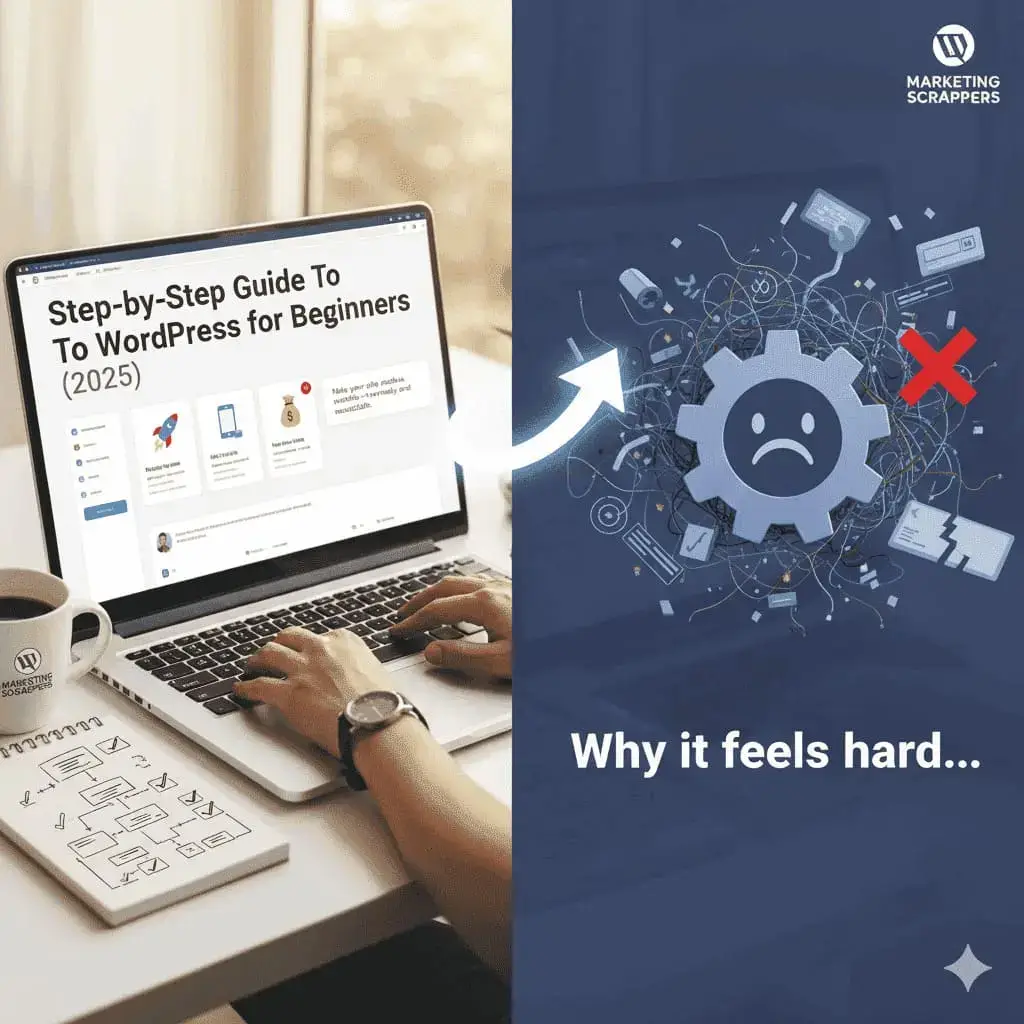
Step-by-Step Guide To WordPress for Beginners (2025) If you’re a business owner, agency, or small team that wants a reliable WordPress site without the headache, this guide will: Take you from a blank domain to a working site, step by step. Show theme tricks to make your site look like the demo. Fix common page-builder and gallery problems fast. Make your site mobile-friendly and monetizable. Point you to deeper tutorials and services when you want experts to handle it. Why WordPress Feels Hard For Beginners(But Isn’t) WordPress powers around 43% of all websites, which proves its flexibility but also explains why it feels overwhelming. The number of choices in themes, plugins, and hosting setups can easily confuse beginners. Common reasons beginners feel stuck: Too many choices (themes, page builders, hosts). Demo sites don’t look the same after installation. Caching, CDN, or server settings hide recent edits. Plugins and themes clash, breaking layouts. Mobile responsiveness feels like a separate job. For business owners, wasted time equals missed business. The goal is to get your site publishable and fast, not “perfect at launch.” 👉 Need a stress-free setup? We’ll handle your WordPress build for you. Setting Up WordPress for Beginners (Step by Step) Goal: a functioning, secure, and fast WordPress site you can edit confidently. 1. Choose the right hosting stack For small businesses: choose managed WordPress hosting (Kinsta, WP Engine, or a trusted local host) to reduce maintenance headaches. For tight budgets: pick a shared host with SSL, backups, and one-click restore. 2. Install WordPress and basic security Install WordPress using your host’s one-click installer. Set a strong admin password and secure email. Activate SSL (often free via your host). Add a security plugin and backup plugin. Keep core, plugins, and themes updated. 3. Pick a starter theme Choose one lightweight theme with starter templates such as Astra, GeneratePress, Kadence, or Blocksy.They offer ready-to-import demo sites, are well-documented, and optimized for speed. 4. Install a page builder (optional) Gutenberg (block editor) is great for simple websites. Elementor, Divi, or Brizy allow drag-and-drop control — just avoid overusing heavy widgets. 5. Create your first pages and menu Add these essential pages: Home, About, Services/Products, Blog, Contact.Build a clear navigation menu and test it on mobile.Add a conversion-focused CTA such as “Get a Free Quote” linked to a contact form or lead funnel. How to Make Your Theme Look Like the Demo Most theme demos include premium plugins and imported content. To replicate them: Import the theme’s starter site (Appearance → Import). Install all recommended plugins. Replace demo text and images with your own content. Adjust colors, fonts, and logos in the Customizer. Test your layout on mobile devices. If your design breaks, deactivate unnecessary plugins and clear all caches — most layout issues come from plugin conflicts. 👉 Want your site to look exactly like the demo? Our WordPress experts can set it up perfectly. Fixing Common Elementor & Page Builder Issues Page builders like Elementor are powerful but can slow sites or cause conflicts.Here are the most frequent issues and fixes: Common Problems Changes not appearing: clear plugin, hosting, and browser caches. Styling not applied: check for duplicate CSS files or experimental settings. Slow pages: remove heavy widgets, minimize animations, and optimize images. Header/footer not editable: controlled by theme; check Theme Builder settings. Quick Troubleshooting Flow Switch temporarily to a default theme to test conflicts. Deactivate plugins one by one to find the issue. Check PHP version and memory limits — increase if needed. Always test fixes on a staging site before going live. Keep your plugin list lean — fewer plugins mean fewer conflicts and faster performance. 👉 Need help fixing Elementor or layout errors? We troubleshoot and optimize WordPress sites. How to Create Beautiful Layouts & Galleries Easily A strong visual layout builds credibility and conversions. Fast Solutions Use Gutenberg gallery blocks — lightweight and mobile-friendly. Starter themes often include gallery templates. For advanced features, try Envira or FooGallery. Gallery Checklist Resize and convert images to WebP before upload. Enable lazy-loading for faster speed. Test galleries on mobile for spacing and readability. 👉 Want us to build stunning galleries that load instantly? Get a professional setup. 💡 Common WordPress Beginner Mistakes (and How to Avoid Them) Even after following every setup guide, most beginners hit the same frustrating roadblocks. Avoid these early mistakes to save time, energy, and sanity: 1. Skipping the Hosting Decision Choosing “just any cheap host” often leads to slow loading speeds and frequent downtime.👉 Quick Tip: If you’re serious about your business site, go with Managed WordPress Hosting (like Kinsta or WP Engine). These offer daily backups, built-in caching, and expert support — so you can focus on content, not tech headaches. 2. Ignoring Theme Setup Instructions Your theme doesn’t look like the demo because most demos use imported starter templates and dummy data.👉 Quick Tip: Look for the “Import Demo Content” or “Starter Templates” option inside your theme dashboard. It instantly sets up layouts and pages like the preview — then you can just replace text and images. 3. Installing Too Many Plugins Every plugin adds extra weight. A slow website kills SEO and user experience.👉 Best Practice: Keep fewer than 15 active plugins and avoid overlapping functionality (like multiple SEO or cache plugins). 4. Forgetting to Optimize for Mobile Over 60% of users visit from mobile.👉 Quick Fix: Always preview your site on mobile and use page builders (like Elementor, Kadence, or GeneratePress) that include responsive editing tools. 🧩 Troubleshooting Common WordPress Issues (Beginner Fixes That Actually Work) If you’ve already set up your site but something broke — you’re not alone. Here’s how to fix the most common problems WordPress beginners face in 2025. Problem Likely Cause Quick Fix Page not showing updates Cache not cleared Clear your browser + plugin cache (or disable caching temporarily) Theme looks broken after import Missing demo content or plugin Reinstall starter templates or required plugins Elementor not showing changes Browser caching or CSS not

premium guest post service
seo blog

How to Get a Premium Guest Post Service: Step-by-Step Guide

To get a premium guest post service, you must start by identifying your goals, choosing trusted white-hat providers, and vetting publishers for quality, relevance, and transparency. Then, focus on agencies that follow white-hat outreach methods, create quality content, and provide transparent reporting. The real key lies in careful vetting and partnership with ethical, proven publishers. 1. Understand What “Premium” Means in Guest Posting A premium guest post service is not a cheaper, high-volume link farm. It’s a service that: Places white-hat, in-content, editorial links in relevant, high-authority sites Guarantees metrics like minimum DR/DA or site traffic Uses manual outreach and offers content creation, vetting, and client approvals Protects link permanence via warranty (e.g., 12 months) The value lies not in just the link itself, but in the context, audience alignment, and long-term stability. 2. Choose the Right Service Model For Premium Guest Posting Service There are three main models you’ll encounter: Model Pros Cons Best For Full-service guest posting agency End-to-end management, quality control, vetting Higher cost, less control Agencies & business owners seeking hands-off, secure solutions Guest posting marketplaces Transparent pricing, site choice, faster placements Risk of low-quality sites or non-editorial placements SEO-savvy teams who can vet domains themselves Manual blogger outreach Highly contextual links, relationship building Slow, labor-intensive, uncertain results Brands focusing on authority and long-term brand equity For premium outcomes, full-service agencies are often safer because they assume quality control risk. 3. Vet Agencies or Providers Using a 10-Point Quality Checklist Before committing, evaluate potential providers using this checklist: Manual outreach, not automated Guarantee of link permanence (e.g., replacements if the link drops) Client approval over domains and content Topical relevance and audience alignment Real organic traffic, not just high DR/DA Healthy link profile and no involvement in PBNs or shady farms In-content editorial placement (not sidebar or footer) Natural anchor text strategy Transparent reporting and post-placement tracking Proper use of rel=”sponsored” or rel=”nofollow” tags If any provider refuses client approval of sites or claims to have a “secret list,” it’s a red flag. 4. Negotiate the Contract and Guarantees When finalizing an agreement, make sure the contract includes: Link replacement warranty (12 months or more) Approval rights (site list, content draft, anchor text) Turnaround time guarantee (e.g., 2–4 weeks) Compliance clause on rel=”sponsored”/nofollow and FTC disclosures Performance tracking (reporting of traffic, rankings, conversions) A transparent agency should protect your interests and maintain clarity throughout the process. 5. Launch in Phases and Monitor Metrics Instead of launching all your links at once: Start with pilot placements (1–3 links) Monitor results for 1–3 months — referral traffic, ranking impact, bounce rate If metrics are positive, scale gradually Maintain consistency — premium linking is a long-term play Key metrics to track include: Referral traffic and engagement Keyword ranking improvements Domain rating or authority growth Conversions generated via those links “Guest posting is just one part of a holistic off-page SEO strategy that builds long-term domain authority.” 6. Common Pricing Tiers and What Drives Cost Here’s a rough market guideline for 2025: Tier Approx. Price Typical Inclusions DR 30–40 / mid-tier $150–$250 Outreach + content + placement DR 50+ / mid-high $250–$400 Better sites, traffic assurance, stronger editorial control Elite / High traffic $400+ Premium domains, high referral traffic guarantee, strict vetting & exclusivity Some agencies charge more because you’re paying for risk mitigation, relationships, and management quality — not just the placement itself. ✅ Summary & Best Practices Checklist Focus on quality over quantity Vet providers across domains, content, traffic, and compliance Negotiate warranties, approval rights, and transparency Start small, measure impact, and scale strategically Combine guest posting with strong on-site content and internal linking When done right, a premium guest post service becomes a sustainable growth engine—boosting authority, referral traffic, and conversions.
Get Growth Insights That Actually Matter

Join our newsletter for practical marketing frameworks, SEO insights, and real growth strategies.

You have been successfully Subscribed! Ops! Something went wrong, please try again.

Marketing Scrappers is a growth-focused digital marketing agency helping brands rank, convert, and scale through SEO-first, data-backed strategies. Built in Pakistan. Serving globally. Specializing in SEO, social media management, and content creation, we deliver measurable results with a focus on innovation and client success.

Address

Company

Agency

Network

Team

Information

Products

Pricing

Disclaimer

Privacy Statement

Terms of Service

© 2023 Created with Royal Elementor Addons